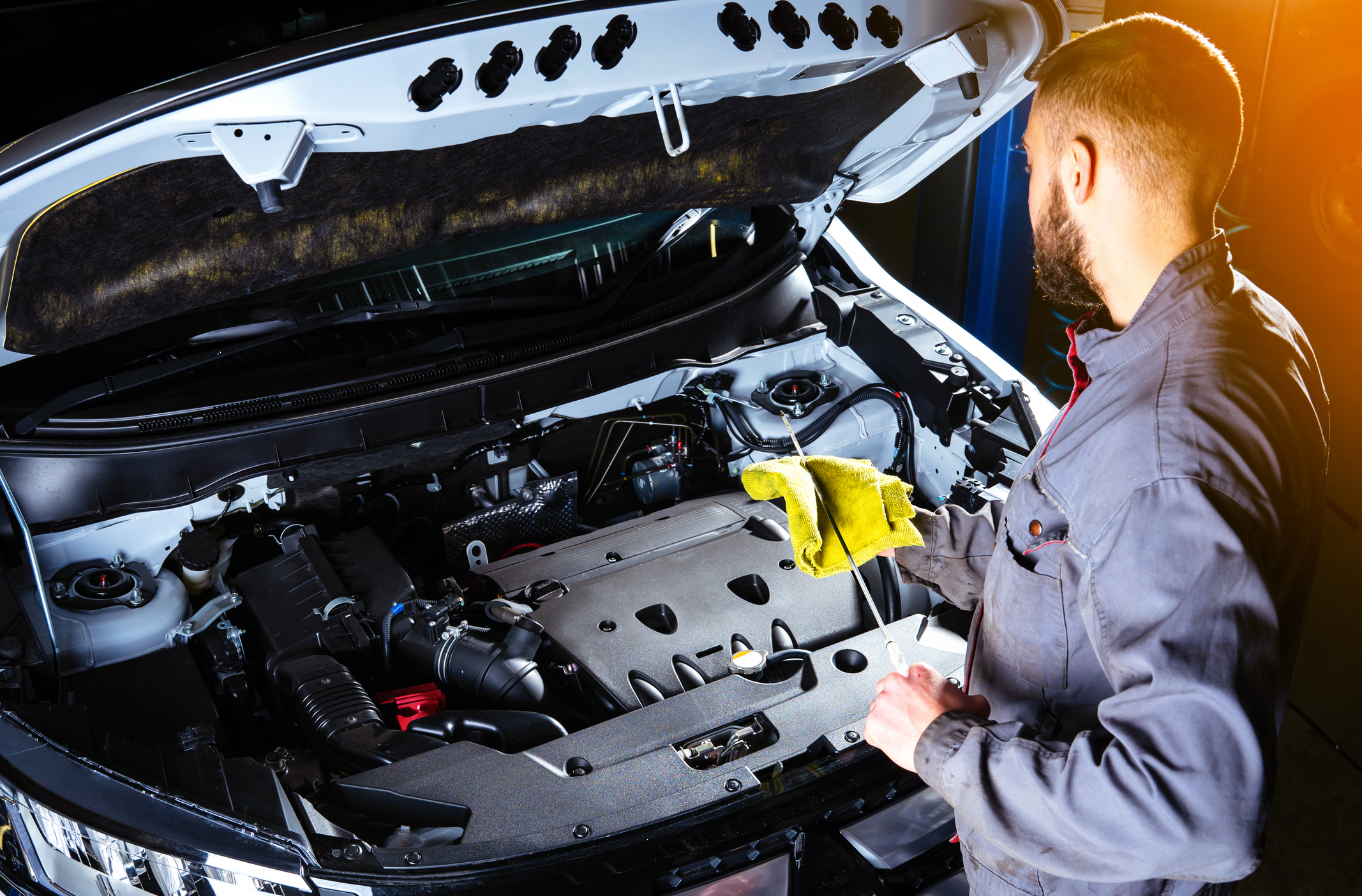
It’s a common question we hear at LMT Auto Repair, and the honest answer is: it depends on your vehicle and the type of oil it uses. The good news is that once you know what’s in your engine, the guidelines are simple. Here’s how to keep your engine running clean, avoid expensive damage, and know exactly when it’s time to come in.
The Short Answer: It Comes Down to Your Oil Type
Different oils protect your engine for different lengths of time. Here’s our quick reference:
| Oil Type | We Recommend | Don’t Push Past |
| Full synthetic | Every 5,000 miles | 7,500 miles |
| Synthetic blend | Every 3,000 miles | 5,000 miles |
Full Synthetic
Most newer vehicles use full synthetic oil. We recommend changing it every 5,000 miles.
Your owner’s manual or dealer may tell you that you can go 7,500 to 10,000 miles between changes. Technically, if that’s what the manufacturer calls for, you can – but in our experience, stretching it that far is asking for trouble (more on that below). We wouldn’t recommend going past 7,500 miles.
Synthetic Blend
Synthetic blend oil doesn’t contain as many detergents and additives as full synthetic, which means it can’t keep your engine clean for as long. For that reason, we recommend changing synthetic blend every 3,000 miles, and 5,000 miles at the very most.
Why Stretching Your Oil Change Is Risky
Even when a manual says you can go longer, here’s what we actually see in the shop when oil is left in too long:
- Sludge buildup. As oil ages and breaks down, it turns into sludge that can clog the small passages inside your engine. That leads to performance issues and, eventually, expensive repairs.
- Burning oil. A lot of modern engines burn oil internally, and most drivers never pop the hood to check their level between services.
- Running the engine dry. Put those two together: if your engine is quietly burning oil and you wait 7,500 to 10,000 miles, you can show up with almost no oil left. An engine running without enough oil isn’t being lubricated, and that can cause catastrophic failure. We’re talking about a blown engine, not a quick fix.
Changing your oil on a sensible schedule is one of the cheapest forms of insurance you can give your engine.
A Simple Rule of Thumb: Watch Your Oil Life
Most modern vehicles have an oil life monitor on the dash that displays a percentage. Our rule of thumb is easy to remember: never let it drop below 20%.
If you’re getting close to that mark, it’s time to come in. Don’t wait for it to hit zero.
What Makes an Oil Change at LMT Different
Let’s be real, an oil change is an oil change at a lot of places. What sets us apart is everything we do when you bring your car in for an oil change. Every single time you come in for an oil change, our team will:
- Pull your vehicle in and check all your lights and fluids
- Perform a full routine checkup
- Put it on the lift & check your suspension, brakes, tires, and more
Then we tell you the truth. If something needs attention now, we’ll let you know. If something’s coming up down the road, we’ll give you a heads-up so you can plan and budget for it. And if you don’t need something, we’ll tell you that too.
That last part is the real difference between us and the quick-lube chains. Big name and chain auto repair places have a reputation for pushing services you don’t actually need and make it sound urgent. We’re not interested in that. In fact, plenty of folks have come down to ask us in person whether they really needed what they were told to buy elsewhere, and more often than not, the answer is no.
We’re here to keep your car safe and running well, and to give you peace of mind every time you pull in.
Ready for an Oil Change?
Whether you’re due now or just want a trustworthy second opinion, the LMT Auto Repair team is here to help. Give us a call or stop by, and we’ll take care of your oil change, and your whole vehicle, the right way.
Frequently Asked Questions
How often should I change full synthetic oil?
We recommend every 5,000 miles, and no more than 7,500 miles, even if your manual allows for longer.
How often should I change synthetic blend oil?
Every 3,000 miles is ideal, and 5,000 miles at the most. Blend oil has fewer detergents than full synthetic, so it needs changing more often.
Does my new car use synthetic oil?
Almost certainly. Newer vehicles typically come with full synthetic oil straight from the factory.
Can’t I just follow my manual’s 10,000-mile interval?
Technically yes, if the manufacturer calls for it. But we don’t recommend pushing past 7,500 miles because of the real risk of sludge buildup and engines that burn oil internally.
What’s the easiest way to know when I’m due?
Keep an eye on your oil life percentage and don’t let it fall below 20%.